How a Comfortable Life Made Me Realize I Couldn’t Take Care of My Own Family
This is the About page for a homesteading and preparedness website built for people who suspect they are less ready for a bad week than they would like to be. If that describes you, you are in the right place, and nobody here will lecture you about it.
Everyday Comfort Runs on Systems You Don’t Control
Turn the tap and water comes out. Flip a switch and the lights come on. Open the phone and dinner arrives at the door. Each of these works through a long chain of people, equipment, and infrastructure that you never see and have no say in.
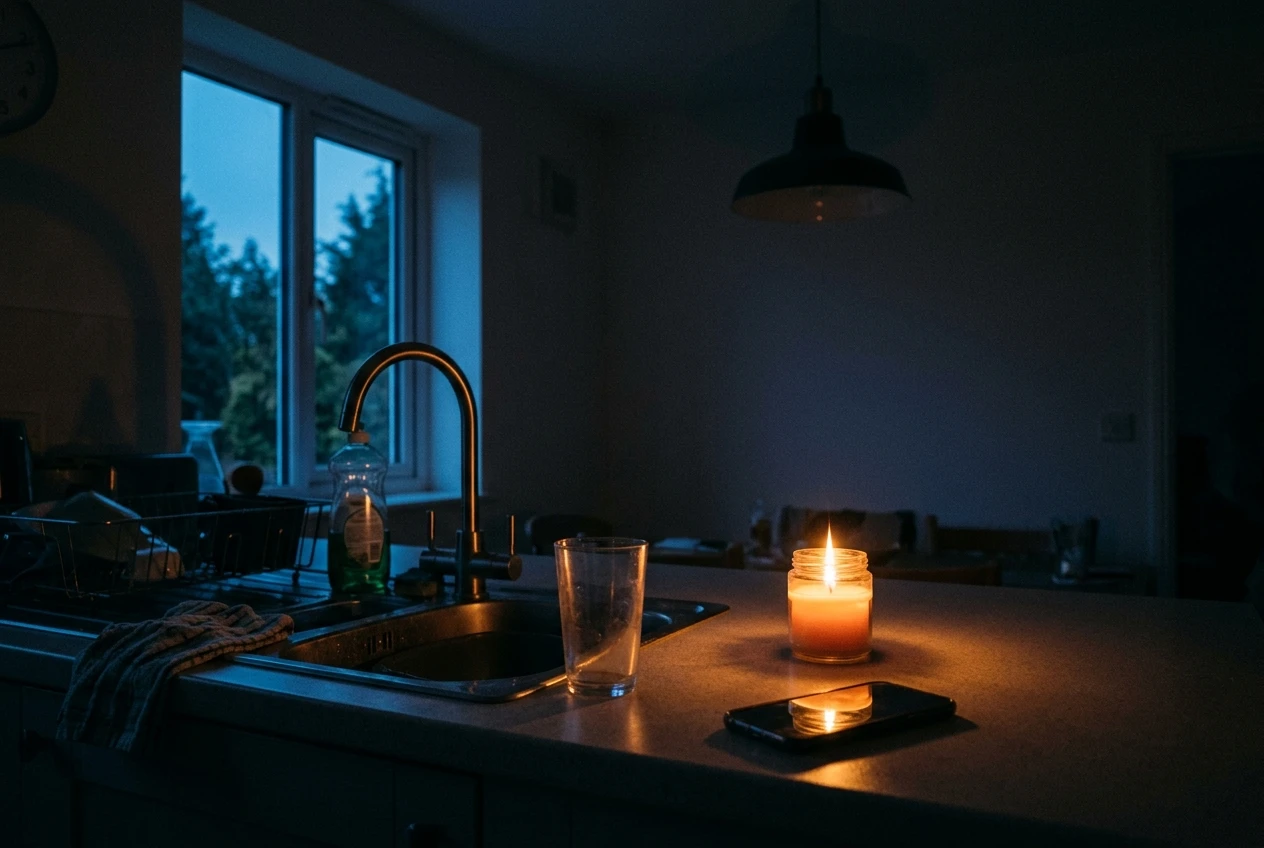
Most of the time that arrangement is wonderful, and it is the reason modern life is so easy. The catch is that convenience does your thinking for you. You never have to know how much water your family drinks in a day, because the tap never runs dry. You never have to know how to keep food safe without a refrigerator, because the power rarely goes out for long.
Then a storm takes down the lines, a road closes, or the store shelves empty out ahead of a forecast, and you find out how much of your household’s routine you have handed to someone else. Realizing that is uncomfortable. It is also useful, because a gap you can see is a gap you can start closing.
What Most of Us Assume, and Why It Makes Sense
The common belief is that emergencies are rare, and that when they happen, someone official will handle them quickly. That belief is reasonable. Most days nothing goes wrong, and professionals do respond to many disasters faster than any individual could.
The weak spot is the gap in the middle. Even in a well-handled emergency, there can be hours or days when you are on your own: no power, no running water, no open store, or a road you cannot drive down. Grocery stores restock through regular deliveries rather than holding months of inventory, so a disruption to the delivery cycle shows up on the shelves quickly.
You do not need to expect the worst to plan for that gap. You only need to accept that it exists and that your family will be the ones standing in it.
Early Attempts at Self-Sufficiency Will Include Some Failures
Almost everyone who starts down this road makes the same kinds of mistakes, and they are easy to laugh about once you know they are normal. Seeds get planted too early or too deep and never come up. A bread recipe turns out dense enough to prop a door open. A pantry fills with canned goods nobody in the house wants to eat or knows how to cook, which is a sad kind of pantry.
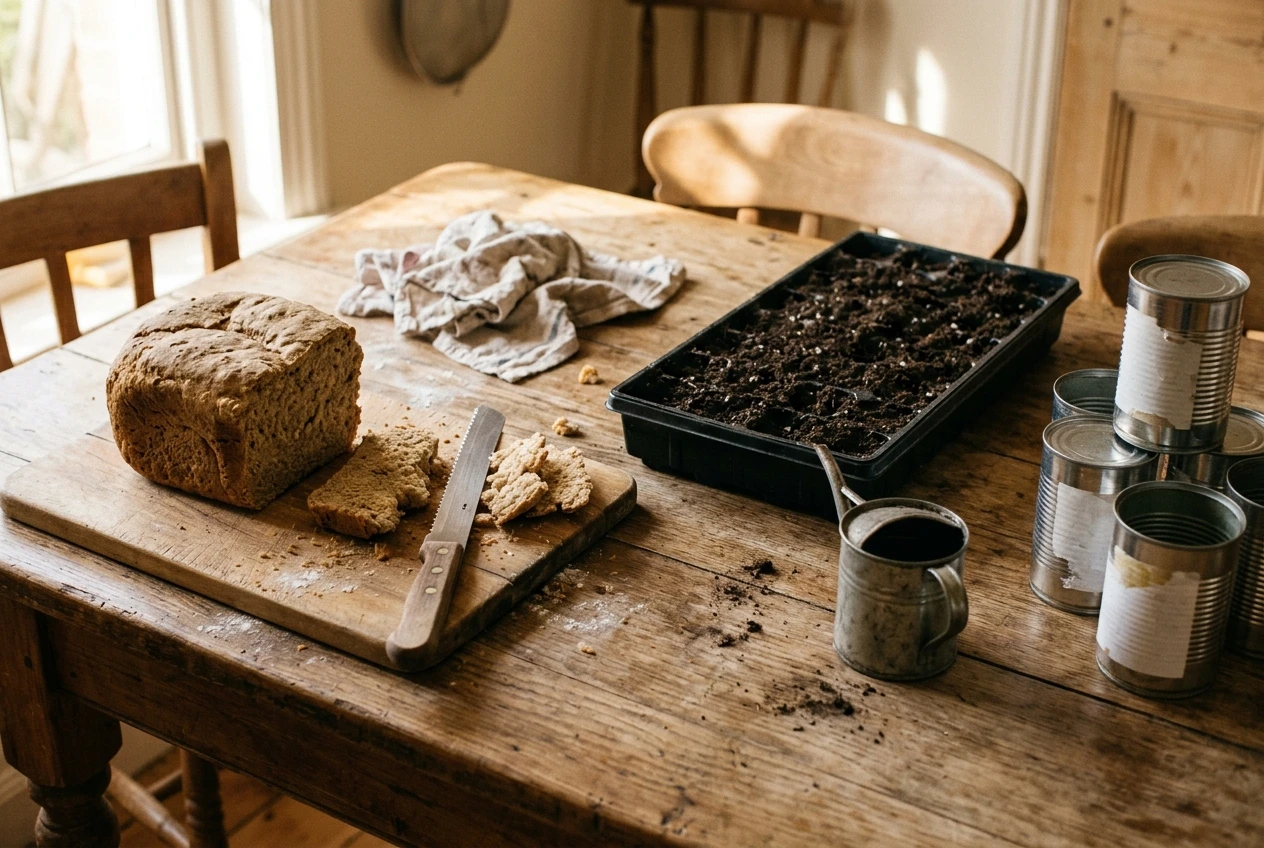
Gear causes its own trouble. A camp stove or generator that has never been run is a guess, not a plan. Batteries sit in a drawer and die. A flashlight is “somewhere in the garage.”
None of this means you are bad at preparedness. It means you are practicing, and practice is how the skills form. The cheapest time to find out that something does not work is a calm Tuesday afternoon with the store ten minutes away, not the middle of an outage.
Skills Hold Up Better Than Stockpiled Fear
A lot of the preparedness world sells anxiety. The pitch is that the worst is coming, and that the right bucket, bunker, or subscription will fix your fear. Fear is a poor teacher. It pushes people into big, scattered purchases they do not understand and cannot maintain.
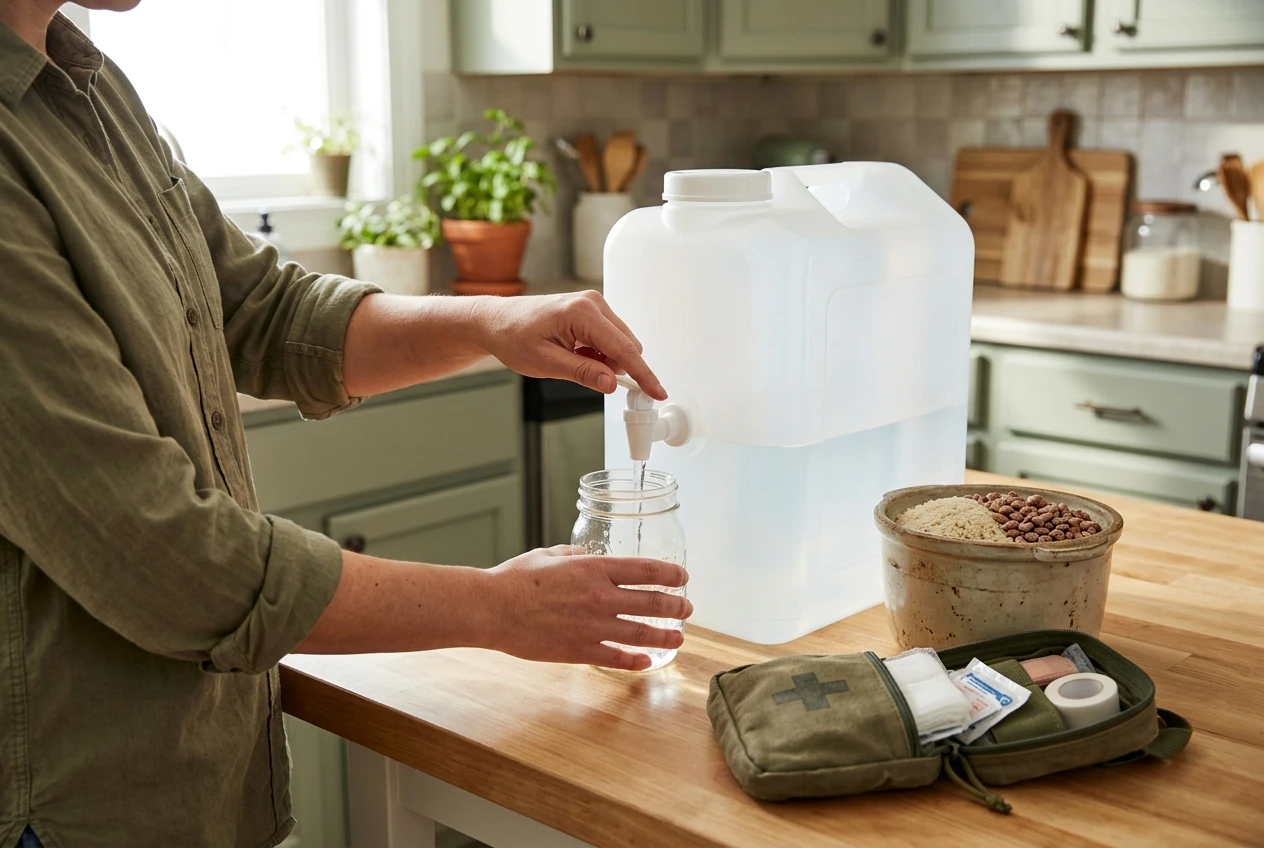
A skill, by contrast, goes with you. Knowing how to store water safely, how to cook a meal from basic staples, how to treat a cut or a burn, and how to keep a household calm and organized does not expire or break. It also applies to ordinary life: a power cut, a job disruption, a rough winter, a tight month at the grocery store.
The approach on this site is to build capability in small steps, using what you already own wherever possible, and to buy things only after you understand why you need them. That order of operations saves money and produces better results.
What You’ll Find on This Homesteading and Preparedness Site
The site covers the practical middle ground between doing nothing and moving off the grid. Expect plain-language articles on:
- Getting started with emergency preparedness at home, including water, food, light, warmth, and communication
- The mental side of preparedness: staying calm, thinking ahead, and making decisions under pressure
- First aid and what belongs in a well-stocked kit
- Sustainable living and homesteading skills, such as growing food, cooking from scratch, and preserving what you grow or buy in bulk
- Gear and supply recommendations, explained so you can decide whether you actually need them
Articles aim to be specific enough to act on. Where something is a matter of opinion or depends on your climate, household size, or budget, the article says so rather than pretending one answer fits everyone.
Who This Site Is For, and Who It Isn’t
This site is for everyday Americans who worry about emergencies and feel underprepared. You might live in an apartment or on five acres. You might have a full pantry or an empty one. You might have a family to protect, or just yourself and a cat who will absolutely not cooperate with your evacuation plan. What you have in common is that you want to get more capable, and you want a friendly guide who does not talk down to you.
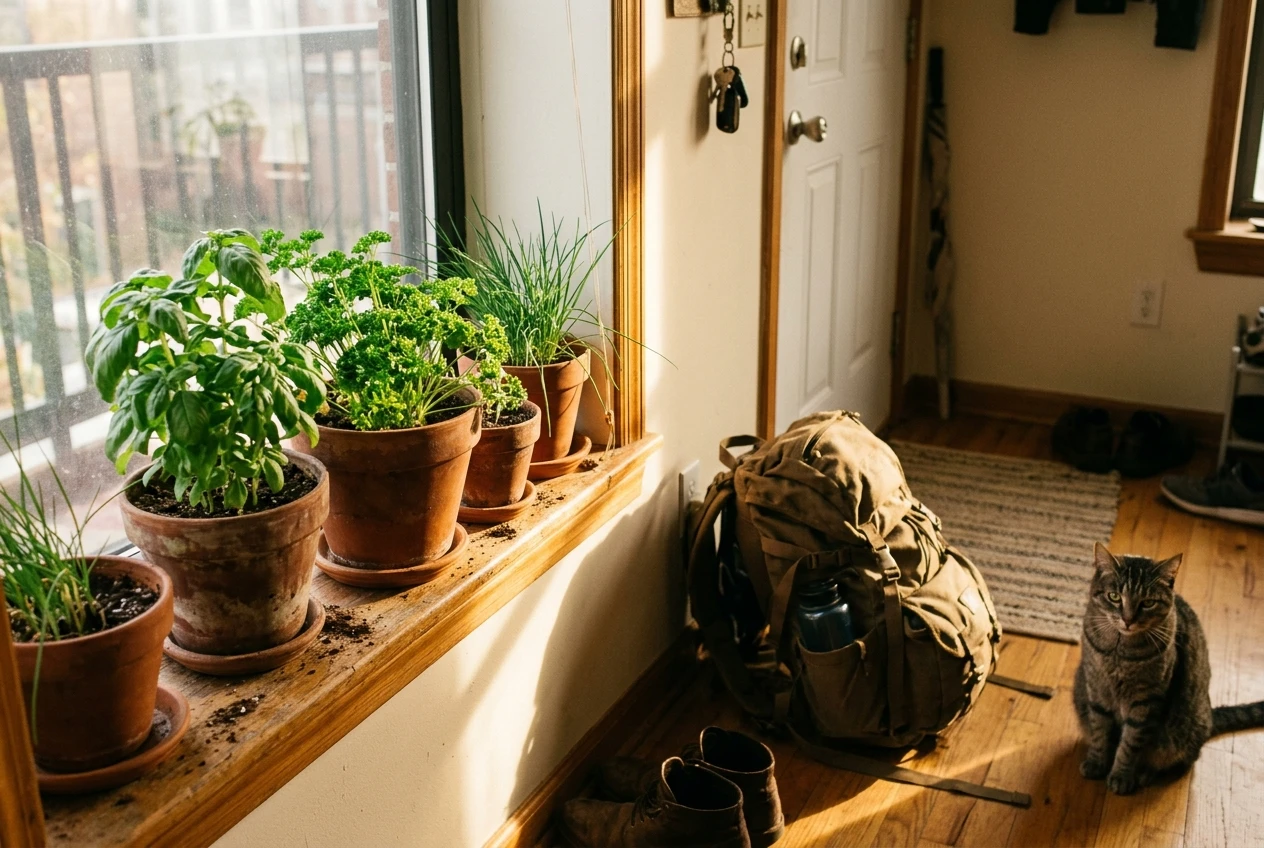
It is also for people curious about homesteading and sustainable living who want to start small. A windowsill herb pot counts. So does learning to bake bread.
The site is a poor fit for anyone looking for doomsday predictions, political arguments, or advice built on shame. Nobody here will tell you that you are foolish for having done nothing so far. The starting point is wherever you are today, and the aim is to make the next step clear and doable.
Where to Start
If you are not sure where to begin, there are three good entry points.
First, get the basic picture of what preparedness involves and in what order. Second, spend a little time on your own mindset, since calm thinking is the skill that makes every other skill work. The article The Preparedness Mindset: Do You Have What It Takes walks through that. Third, put together a first aid kit you actually know how to use, starting with what items are essentials for a well-stocked first aid kit.
You can do all three in a weekend, and most of it costs little or nothing beyond things already in your house.
How This Site Makes Money, Plainly
You should know how the site is paid for. It earns income in three ways:
- Affiliate links. Some articles link to products, and if you buy through one of those links, the site may earn a commission at no extra cost to you.
- YouTube. Views on the channel’s videos generate ad revenue.
- Sponsored advertisements. Companies may pay to advertise on the site.
Recommendations are meant to be things that fit a real preparedness need, and an affiliate link does not change the advice. If a product is not worth buying, the article should say so. You are always free to skip the links and buy elsewhere, or to buy nothing at all. Plenty of preparedness is free.
Your Next Step
The best place to begin is Prepping For Beginners. It lays out the basics in a sensible order, with no jargon and no pressure. If you would rather watch the work done in real life than read about it, the YouTube channel is there as a companion, and it is a good place to see how these skills look in practice. Start with the beginner guide, pick one small thing to do this week, and do it.